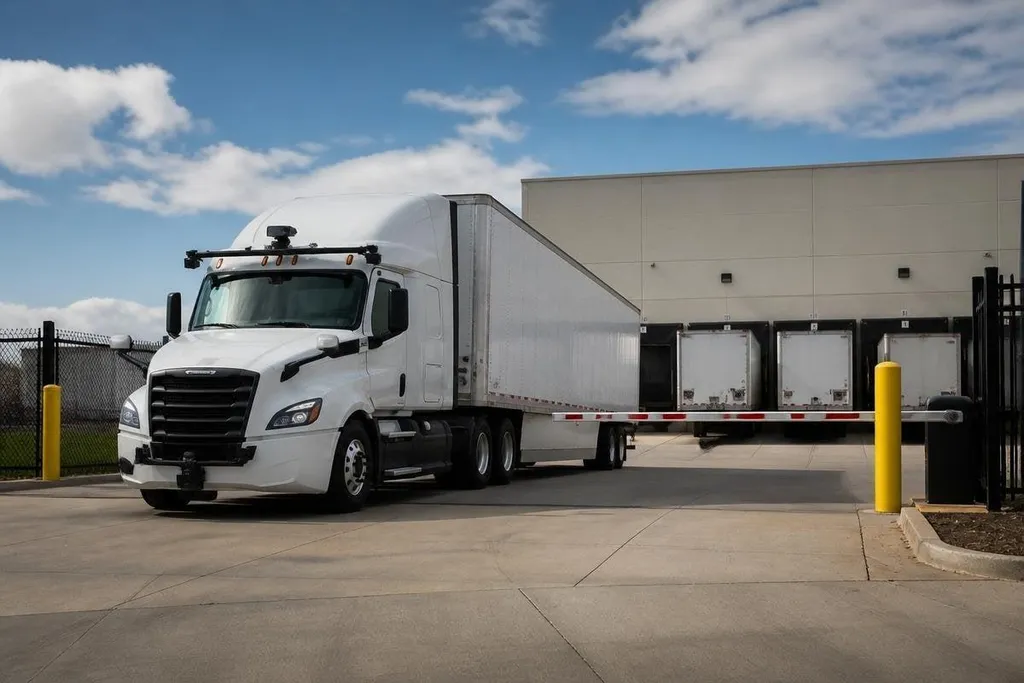
A self-driving truck can follow a marked highway and still fail the job at a depot gate. Complete freight runs will set the test, with the truck moving between a loading yard and a drop-off bay while its software handles moments it can't manage alone.
- Highway travel is only one part of the work.
- Sensors must handle weather, road changes, and poor visibility.
- Fleet operators will need a plan for remote help, repairs, and manual handoffs.
The road is only the middle of the job
Highway travel suits automated systems because lane markings, traffic flow, and road direction give them useful clues. Freight work starts before the entrance ramp, though. Leaving a yard, the truck may need to pass a gate, find a trailer, wait for a worker, and position itself at a loading dock.
Those low-speed tasks can be harder than steady highway travel. A yard has parked trailers, people on foot, temporary barriers, reversing vehicles, and markings that may change during a shift. A system that works on open road but needs a person at every depot still leaves the fleet with a costly handoff.
The route also includes places where road rules are less clear. Construction zones can move from day to day. A blocked lane may force a late merge. A police officer or road worker may give instructions that the truck must recognize and follow.
Sensors need a plan for bad conditions
The truck usually depends on several sensor types because each one handles a different part of the view. Cameras read lane lines and signs. Radar measures the position and movement of nearby objects. LiDAR sends out light pulses to build a three-dimensional view of the road.
Those sensors still face limits. Rain can cover a camera, spray can reduce visibility, and glare can make road markings harder to read. Snow may hide lane lines or change the shape of roadside objects. The truck needs a safe response when its view becomes uncertain, not a confident guess.
That response may mean slowing down, stopping in a safe place, or asking a remote operator for help. Remote assistance can guide a truck through a rare situation, but it doesn't remove the need for onboard software. A connection may be delayed or unavailable, and the truck still has to remain safe while it waits.
The handoff matters as much as the trip
Many plans for automated freight depend on a defined operating area. A truck may travel itself on selected highways while people handle the first and last parts of the route. That can work when the handoff points are designed for it.
The site needs room for the truck to stop, a person who can take control, and a process for checking the vehicle before it continues. Dispatch software must also show why the handoff happened. A vague alert creates extra calls and slows the freight run.
For a fleet manager, this is where robotics reporting becomes useful beyond launch announcements.
Remote help changes the cost of a self-driving truck. Robot24 can connect a road test to the route, support calls, and staff work behind each trip, giving fleet managers more than the demo result before they price the service plan.
One that asks for help too often may still cost less than a staffed vehicle, but that answer depends on the task, the route, and the service plan. The maker must show how often the truck stops, what support each event needs, and who pays when a vehicle cannot continue.
What operators should ask before buying
A fleet team can test the claim by asking for evidence tied to its own routes. Use this checklist before signing a pilot agreement:
- Route limits: Which roads, weather conditions, depots, and drop-off areas are included?
- Fallback plan: Where does the truck stop when sensors lose a clear view?
- Remote support: Who responds to a request, and what can they control?
- Site changes: How does the system handle new barriers, lane closures, or trailer positions?
- Maintenance work: Who cleans sensors, fixes faults, and returns the truck to service?
- Success measure: Does the trial count completed trips, or only automated highway miles?
The last point should shape the whole trial. A route with long highway sections may produce a good road video while hiding the work at each end. Count full trips, support calls, waiting time, and manual miles instead.
The next test is a complete freight run
The strongest truck will be the one that finishes a useful route with clear limits and a practical recovery plan. I’d judge a system by its unplanned stops and depot handoffs before its longest stretch of automated highway travel.
That measure gives buyers a number they can use: completed freight runs per shift, with each intervention recorded. Until truck makers publish that record for real routes, the main question remains open: how much of the job can the vehicle finish without help?